Natural satellite
The Moon
Dark seas, bright highlands and a record of impacts

- Captured
- 25 September 2026

- Captured
- 21 September 2026
1 of 2: 25 September · enhanced colour
What is it?
Earth’s natural satellite. Unlike the faint nebulae, the Moon is bright because it reflects sunlight and is comparatively close.
What can you see?
The dark areas are maria — ancient volcanic plains, not liquid seas. Brighter highlands carry many craters. Bright streaks around some impacts are rays of ejected material.
Why do the two dates look different?
The Sun’s angle changes as the Moon moves around Earth. Low sunlight makes shadows and relief stand out near the day–night boundary. Processing also affects sharpness and colour; these two finished images are not a controlled experiment.
The main view has enhanced colour. It can emphasise subtle differences across the surface, but it is not how the Moon normally appears to an eye.
Behind the photo · optional experiment
Move the sunlight, change the Moon
Take control of the Sun’s direction. Watch the day–night boundary sweep across a textured globe while the Moon itself stays whole.
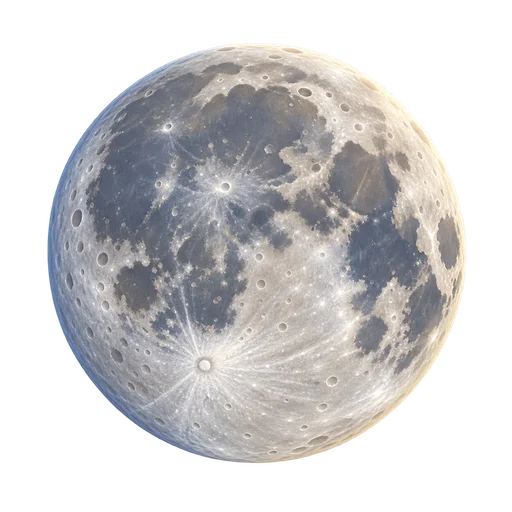 Journey illustration · not a photograph
Move the sunlight
This experiment changes the physics or the viewpoint. Your photograph stays as the reference observation.
Open the full Lab view ↗